US Moves Closer to Total Control of Iranian Airspace as Military Campaign Intensifies
The United States is approaching what officials describe as complete aerial dominance over Iran, as military operations against the country enter their fifth consecutive day, the White House has said.
Speaking to reporters on Wednesday, March 4, White House Press Secretary Karoline Leavitt disclosed that American forces are on the verge of securing full control of Iranian airspace, a development that could significantly shift the dynamics of the ongoing conflict.
According to Leavitt, U.S. military planners expect to achieve “complete and total dominance” of the skies over Iran within hours, allowing allied forces to operate without interference.
“The United States anticipates having complete and total dominance over Iranian airspace in the coming hours,” she said during the briefing, underscoring Washington’s confidence in the progress of the ongoing campaign.
Earlier, U.S. Defence Secretary Pete Hegseth confirmed that American forces are coordinating closely with the Israeli military to secure the skies over the Middle Eastern nation.
Hegseth stated that the joint military effort between the United States and Israel aims to establish uncontested airspace over Iran, although he did not provide a specific timeframe for when the objective would be fully achieved.
“We will have complete control of Iranian skies, uncontested airspace,” he said, adding that such control would enable allied aircraft to carry out sustained operations against Iranian military targets.
He explained that the strategic goal is to neutralize Iran’s missile capabilities and dismantle key components of its defence industrial base.
“That means we will fly all day, all night—day and night—finding, fixing and finishing the missiles and the defence industrial base of the Iranian military,” Hegseth said.
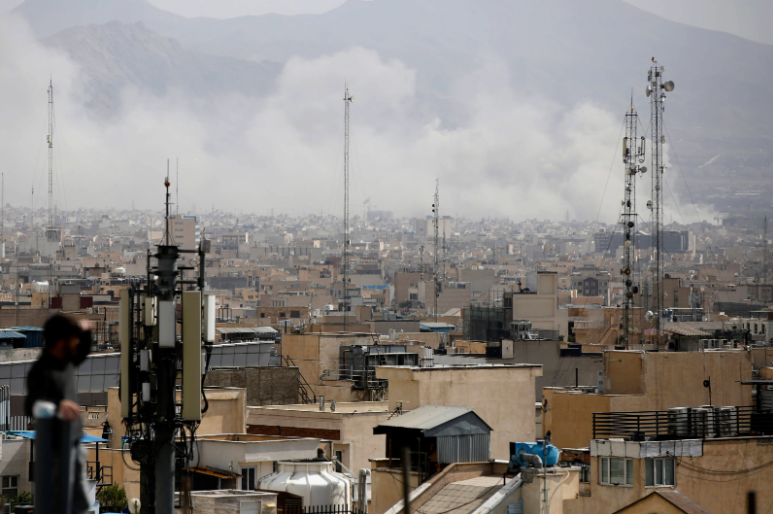
The remarks come as joint U.S.–Israeli air operations intensify across Iran, with strikes reportedly focusing on missile launch sites, air defence systems, and other military infrastructure believed to support Tehran’s strategic weapons programmes.
The escalation marks one of the most significant military confrontations in the region in recent years, raising concerns among global observers about the potential for a broader regional conflict involving other Middle Eastern powers.
Security analysts say that achieving full air superiority would give the United States and its allies a major operational advantage, allowing them to conduct surveillance, targeted strikes, and logistical missions across Iranian territory with minimal resistance.
However, the unfolding situation continues to draw international attention as governments and diplomatic actors monitor whether the conflict could expand beyond the current theatre of operations.